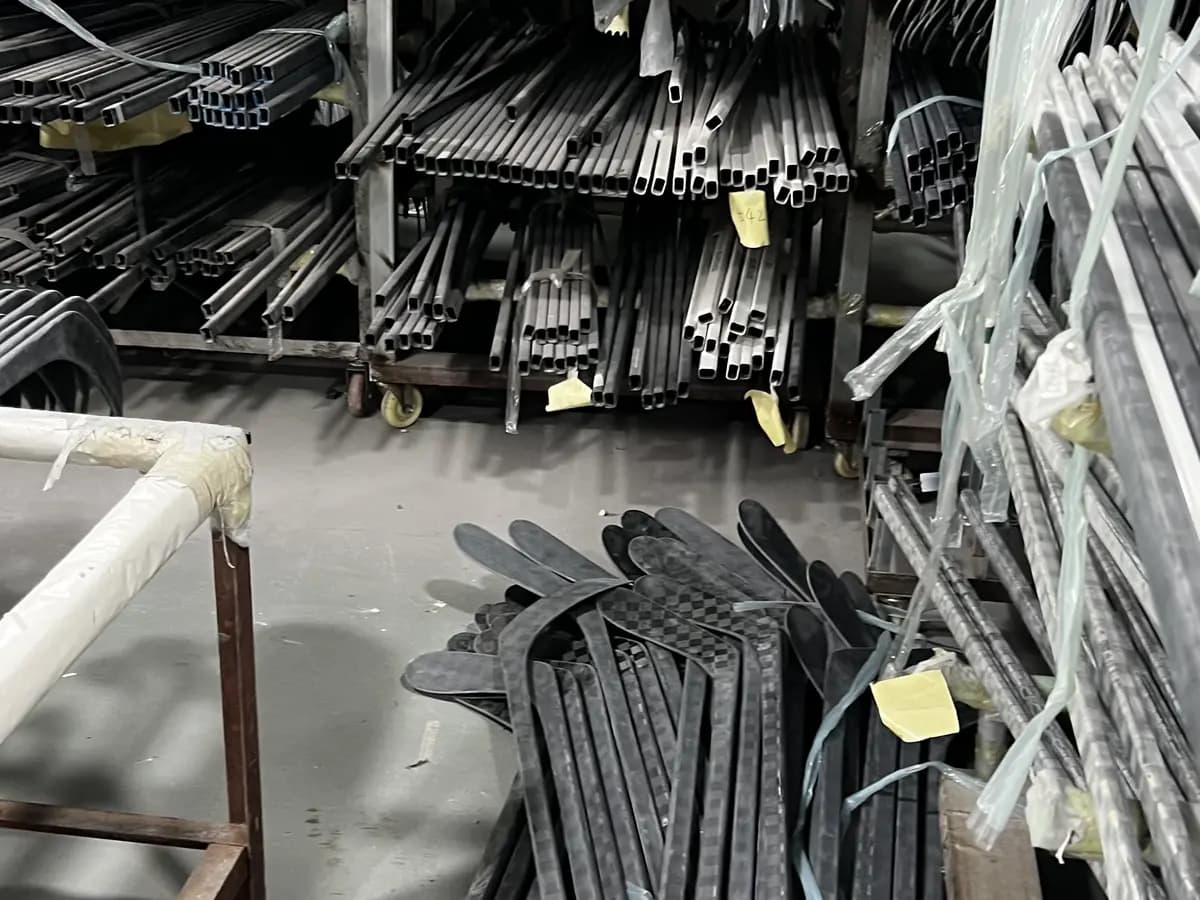
Carbon fiber is an inorganic high-performance fiber that is over 90% carbon, produced by carbonizing polyacrylonitrile (PAN) or pitch precursor at high temperature. Each filament is only 5–10 microns in diameter — thinner than a human hair.
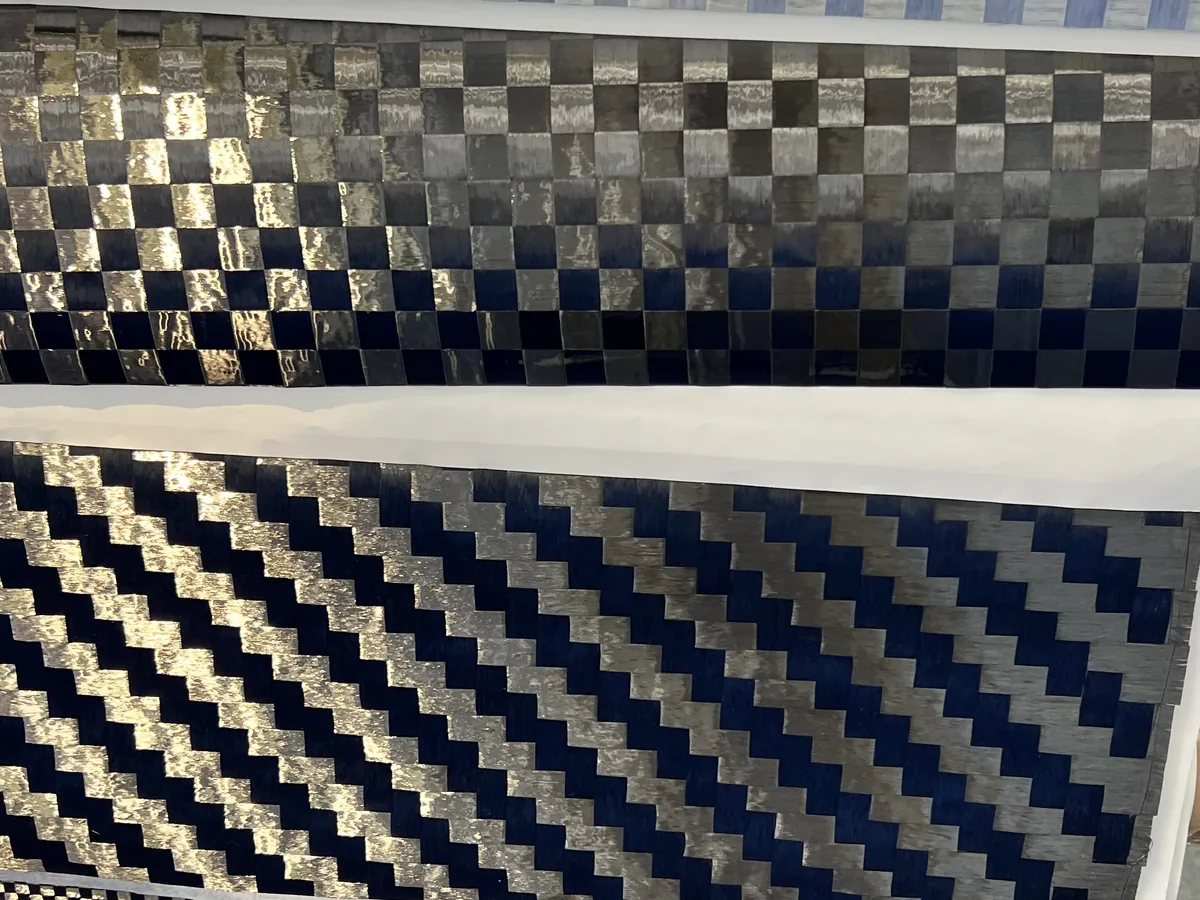
Key performance advantages
- Light: density around 1.6 g/cm³ — a quarter of steel, two-thirds of aluminum
- Strong: tensile strength of 3,500–7,000 MPa, with specific strength several times that of steel
- Stiff: high elastic modulus, resists deformation under load, dimensionally stable
- Fatigue- and corrosion-resistant: chemically inert, does not rust, minimal long-term degradation
- Highly designable: stiffness and strength can be tuned directionally via ply angle and count
Carbon fiber ≠ carbon fiber composite
A single carbon filament cannot be used on its own. Real products are carbon fiber reinforced polymer (CFRP) — carbon fiber as reinforcement with an epoxy resin matrix, formed by layup and curing. The fiber carries the load while the resin transfers stress and holds the shape; only together do they deliver usable mechanical properties.
Typical applications
- Sports equipment: hockey sticks, tennis / pickleball / padel rackets, bike frames, fishing rods, golf shafts
- Aerospace: wings, fuselage panels, satellite structures
- Automotive: body panels, drive shafts, structural trim
- Industrial: robotic arms, drone components, medical imaging tabletops
The reason carbon fiber dominates premium sports gear is simple: "light yet strong" translates directly into faster swing speed, better feel and less fatigue — which is exactly why the Stanley C-series hockey sticks use full-carbon composite.